Tuesday, October 16, 2012

Writers and their cats

Never liked (or thought about) Charles Bukowski and I'm puzzled by how everybody seems to be taken by him lately. But all I know is he understands cats and that's good enough for me. Being a cat person, I immediately like people who love cats. We are a unique lot. We suffer creatures who live with us on their own terms and we are only too happy to care for them in exchange for the privilege of watching them.

exactly right
the strays keep arriving: now we have 5
cats and they are smart, spontaneous, self-
absorbed, naturally poised and awesomely
beautiful.

one of the finest things about cats is
that when you're feeling down, very down,
if you just look at the cat at rest,
at the way they sit or lie and wait,
it's a grand lesson in persevering
and
if you watch 5 cats at once that's 5
times better.

no matter the extra demands they make
no matter the heavy sacks of food
no matter the dozens of cans of tuna
from the supermarket: it's all just fuel for their
amazing dignity and their
affirmation of a vital
life
we humans can
only envy and
admire from
afar.


my cats
I know. I know.
they are limited, have different
needs and
concerns.

but I watch and learn from them.
I like the little they know,
which is so
much.

they complain but never
worry,
they walk with a surprising dignity.
they sleep with a direct simplicity that
humans just can’t
understand.

their eyes are more
beautiful than our eyes.
and they can sleep 20 hours
a day
without
hesitation or
remorse.

when I am feeling
low
all I have to do is
watch my cats
and my
courage
returns.

I study these
creatures.

they are my
teachers.


The History of One Tough Motherfucker
he came to the door one night wet thin beaten and
terrorized
a white cross-eyed tailless cat
I took him in and fed him and he stayed
grew to trust me until a friend drove up the driveway
and ran him over
I took what was left to a vet who said,"not much
chance...give him these pills...his backbone
is crushed, but is was crushed before and somehow
mended, if he lives he'll never walk, look at
these x-rays, he's been shot, look here, the pellets
are still there...also, he once had a tail, somebody
cut it off..."
I took the cat back, it was a hot summer, one of the
hottest in decades, I put him on the bathroom
floor, gave him water and pills, he wouldn't eat, he
wouldn't touch the water, I dipped my finger into it
and wet his mouth and I talked to him, I didn't go any-
where, I put in a lot of bathroom time and talked to
him and gently touched him and he looked back at
me with those pale blue crossed eyes and as the days went
by he made his first move
dragging himself forward by his front legs
(the rear ones wouldn't work)
he made it to the litter box
crawled over and in,
it was like the trumpet of possible victory
blowing in that bathroom and into the city, I
related to that cat-I'd had it bad, not that
bad but bad enough
one morning he got up, stood up, fell back down and
just looked at me.
"you can make it," I said to him.
he kept trying, getting up falling down, finally
he walked a few steps, he was like a drunk, the
rear legs just didn't want to do it and he fell again, rested,
then got up.
you know the rest: now he's better than ever, cross-eyed
almost toothless, but the grace is back, and that look in
his eyes never left...
and now sometimes I'm interviewed, they want to hear about
life and literature and I get drunk and hold up my cross-eyed,
shot, runover de-tailed cat and I say,"look, look
at this!"
but they don't understand, they say something like,"you
say you've been influenced by Celine?"
"no," I hold the cat up,"by what happens, by
things like this, by this, by this!"
I shake the cat, hold him up in
the smoky and drunken light, he's relaxed he knows...
it's then that the interviews end
although I am proud sometimes when I see the pictures
later and there I am and there is the cat and we are photo-
graphed together.
he too knows it's bullshit but that somehow it all helps.


Another tough motherfucker was writer Ernest Hemingway who famously loved felines. When one of his cats, Uncle Willie, was run over in 1953, Hemingway elected to shoot the suffering animal. He writes a distraught letter to his friend to report.

Dear Gianfranco:

Just after I finished writing you and was putting the letter in the envelope Mary came down from the Torre and said, ‘Something terrible has happened to Willie.’ I went out and found Willie with both his right legs broken: one at the hip, the other below the knee. A car must have run over him or somebody hit him with a club. He had come all the way home on the two feet of one side. It was a multiple compound fracture with much dirt in the wound and fragments protruding. But he purred and seemed sure that I could fix it.

I had René get a bowl of milk for him and René held him and caressed him and Willie was drinking the milk while I shot him through the head. I don’t think he could have suffered and the nerves had been crushed so his legs had not begun to really hurt. Monstruo wished to shoot him for me, but I could not delegate the responsibility or leave a chance of Will knowing anybody was killing him…
Have had to shoot people but never anyone I knew and loved for eleven years. Nor anyone that purred with two broken legs.

I can only imagine the heartbreak Hemingway felt shooting his own cat and the vast wellspring of love that he must have drawn strength from to have the courage to pull the trigger.

Below are photos of Hemingway, Bukowski and other famous authors with their cats.

Ernest Hemingway and Nick, one of his many six-toed cats
 
Charles Bukowski and cat
 
Truman Capote
 
W.H. Auden whose "Funeral Blues" I dedicated to Pepe
 
My favorite sci-fi/horror writer Ray Bradbury
 
Philip K. Dick, another favorite sci-fi writer
 
Beat poet Jack Kerouac with his cat Tyke. He describes Tyke's death in his memoir Big Sur: "Ordinarily the death of a cat means little to most men, a lot to fewer men, but to me, and that cat, it was exactly and no lie and sincerely like the death of my little brother -- I loved Tyke with all my heart, he was my baby who as a kitten just slept in the palm of my hand and with his little head hanging down, or just purring for hours, just as long as I held him that way, walking or sitting -- He was like a floppy fur wrap around my wrist, I just twist him around my wrist or drape him and he just purred and purred and even when he got big I still held him that way, I could even hold that big cat in both hands with my arms outstretched right over my head and he'd just purr, he had complete confidence in me -- and when I'd left New York to come to my retreat in the woods I'd carefully kissed him and instructed him to wait for me 'Attends pour mue kitigingoo' -- But my mother said in the letter he had died the NIGHT AFTER I LEFT."
 
George Bernard Shaw and his cat Pygmalion
 
William S. Burroughs, in The Cat Inside, explains why cats are greater than dogs,“Like most qualities, cuteness is delineated by what it isn't. Most people aren't cute at all, or if so they quickly outgrow their cuteness ... Elegance, grace, delicacy, beauty, and a lack of self-consciousness: a creature who knows he is cute soon isn't.”

 Nobel Prize author Hermann Hesse groveling after his cat
 

Notorious French novelist Colette was no match for her cats, "My cat does not talk as respectfully to me as I do to her."


 Stephen King and Clovis


Neil Gaiman and his cat Zoe who recently died. Neil on Zoe: "And I'm wondering what it is about this small blind cat that inspires such behavior -- mine, Olga's, Lorraine's.... I've had cats in this house for 18 years, and there are cat-graves down by the gazebo. Two cats died of old age last year. It wasn't like this. I think it may be the love. Hers, once given, was yours, unconditionally and utterly."
Of the human-cat relationship, I like how Truman Capote described it in his novella, Breakfast at Tiffany's: “She was still hugging the cat. “Poor slob,” she said, tickling his head, “poor slob without a name. It’s a little inconvenient, his not having a name. But I haven’t any right to give him one: he’ll have to wait until he belongs to somebody. We just sort of took up by the river one day, we don’t belong to each other: he’s an independent, and so am I. I don’t want to own anything until I know I’ve found the place where me and things belong together. I’m not quite sure where that is just yet. But I know what it’s like.” She smiled, and let the cat drop to the floor. “It’s like Tiffany’s,” she said.” 
 

*Some photos and quotes c/o Buzzfeed and random cat sites

Friday, October 05, 2012

Fatal Attraction

Years ago I wrote about my irresistible attraction to 23 year olds. Since then I’ve moved on. I am now attracted to 29 year olds. I’m kidding. Actually I already swore off 20-somethings a long time ago. Once you get past the thrilling joie de vivre all you end up with is boring self-absorption. Besides, I should be the retard in the relationship. I have no business pretending to be the responsible adult.

But once in a while the attraction comes back. Like eczema, it never really goes away; it just stays dormant until the next trigger comes along. And a movie like Liberal Arts is one of those things that make one feel wistful about old longings. Themes of poignant awkwardness and inexorable doom never grow old, I guess. Unfortunately I’m at that age when it’s already icky to carry on with a 20-something. It would just seem like I was taking advantage in a Woody Allen kind of way. Still…


Sometimes life does imitate art


Over a month ago I was in Siquijor to take a break and take stock of my life after I had lost my job. Coincidentally, a few weeks before I went there I saw a film called A Good Year, about a driven, ruthless London banker who was suspended from his job while he was in France attending to his late uncle's estate. While in his uncle's vineyard he is reminded of life lessons his uncle taught him growing up and he also meets a girl who teaches him about love and how life is more important than money, etcetera.

In one scene, the protagonist and his love interest have their first date around a pool that's surrounded by trees and lights and candles. Just a few clicks from where I stayed in Siquijor there was also a large natural pool which the locals had set up with tables and food booths for the town fiesta and I was struck by how similar the movie and the Siquijor set-up looked (the banderitas and the terrible picture taken with my phone camera notwithstanding). And there was a band too but instead of French songs, the Siquijor band played, of all things, jazz music. That scene was actually my favorite part of the movie because I was charmed by the set design and so it was a bit uncanny to find something similar in Siquijor.

That night in the pool, engulfed in the heady aroma of beer and roasting meat, surrounded by cheerful locals and listening to good music, was one of the happiest I've ever been in a long time.

Before I went on that trip I resolved that I would open myself to anything and everything. I also added a self-imposed rule: I would talk less and listen more. I would not edit what people said (either in reality or in my head) the way I'd gotten used to--only listening for information that I needed to do my work, not caring to hear the rest of what people had to say.

And so I listened. How was it that only a month ago I wouldn't have cared? I suppose that, like the Russell Crowe character in the movie, I too had lost that part of myself that was good in the course of trying to be the best at what I do.

I can't say I'm out of the woods yet but I do hope that like the character, and in the tradition of feel-good movies, I will also find salvation in the end.

Thursday, September 27, 2012

Cat People

I’ve been spending a lot of time at my best friend’s house where they have a dog, a little shih tzu called Maki. Now I have to confess that I used to detest shih tzus largely because they’re the dog of choice of every fucking sicko anthropomorphic dog owner in the country. Shih tzus are the Barbies and Baby Alives of these idiots, cossetted like children and decked out in every ridiculous gewgaw imaginable. I actually pity them slipping and sliding in their shoes and sweltering under their doggie clothes while festooned with ribbons galore. Cats would never allow themselves to be treated with such indignity. Which brings me to the subject of cats and their humans.

Cat lovers get no respect. We’re ridiculed for loving an animal that doesn’t seem to offer any pay-off—no shimmying joyously when we come home, no manic licking of our faces to show love and devotion, no coming when we call. And that’s true too. We don’t get any respect from our cats. But I submit that for cat owners, a cat’s lack of obsequiousness is precisely why we’re so powerfully drawn to it. It’s really a question of space. Cat people like their space. And so do cats. When we come home our cats are there to welcome us too, not with frantic shaking, but with a meow or three, a few dignified swishes and then they’re off doing their thing and we too, are left to do ours. And that’s true for every day of our mutually-agreed co-existence.
But I love how our cats don’t need us.  
Sure they come to us for food and shelter but it’s really because they’re opportunists with a keen sense of survival. But left to their own devices, they can hunt for food and clean themselves, which is all that matters really. If I never existed, I’m sure my cat Pepe would have survived on his own, feeding on rodents and human scraps, occasionally brawling with other feral cats for territory, maybe siring a few hairy kittens of his own. And I suspect he would have been just as happy.
That’s why I believe the time we spend with cats is more magical. When we come together to play or sit companionably near each other, it’s because we both want to. In that brief moment at least, we are connected. Nothing comforts me more profoundly after a late night at the trenches than to have Pepe sit under my chair while we both stare out into the dark, thinking our own thoughts.  No expectations, no drama, just him being him and me being me. After a while I go off to bed and he goes off to wherever he goes to each night. We can, and did, leave each other’s presence anytime with no hard feelings. It’s just what it is. And that’s why it’s a peculiar person who can love a cat. I think that cat people are more welcoming of other people’s oddities. After all, we live with a creature who would stare at dust motes for hours before suddenly tearing around the house as if possessed. We’re also happy observers. Much of the enjoyment we get from our cats is not through active play but through quiet observation. And lastly, we’re emotionally low-maintenance people. Not to say that we love less than the average person. In fact, I believe cat people love more intensely just that it’s not a needy, show-offy, bromidic kind of love.
Denys, Robert Redford’s character in Out of Africa, is perhaps the best example of what a cat person (and a cat) is like. In one scene where he’s arguing about love and freedom with Meryl Streep’s character, he sums it up thusly:
Why is your freedom more important that mine?
It isn't. And I've never interfered with your freedom.
No. I'm not allowed to need you.
Or rely on you, or expect anything from you.
I'm free to leave.
But I do need you.
You don't need me.
If I die, will you die? You don't need me.
You're confused. You've mixed up need with want. You always have.
My God. In the world that you would make, there would be no love at all.
Or the best kind. The kind we wouldn't have to prove.

In the eight years he was with me, Pepe taught me to love without expectation and has made my life all the richer for it.


Friday, September 21, 2012

PR Myths: So you never have to wonder again

Many years ago I had a conversation with a reporter and we ended up talking about books. At one point he said, with genuine surprise in his voice, "I didn't think that you read." Being the PR trouper that I was, I managed to offer a gracious smile. But I was stunned. For a voracious reader like me, who's been reading classics before the age of ten, his remark was unexpected and offensive. How dare he?! I probably read more books during the first 15 years of my life than he ever will in his entire lifetime. And I’m not talking about paperback pop trash either.

But I suppose it's the pitfall of my occupation. PR people generally don't appear very bright to newsmen. And why should we? If we’re not pimping our latest press release, we’re bugging them to come to our client’s endless and sometimes, to be honest, mindless events. Our discipline prevents us from saying anything other than what’s acceptable to both clients and our own agency, always careful to appear friendly and neutral lest we betray what we really think. Even Facebook is heavily self-censored. What appears on our pages is generally acceptable pap. Nothing too controversial, language controlled (if we must swear, we use asterisks and only write innocuous cuss words like sh*t or d**n), photos sanitized (no drunk-ass pictures, nothing sleazy, no candid shots where we’re looking decidedly unglamorous), no political opinions, no commentaries on business issues, nothing in fact, that will give people an indication that we’re intelligent people. Of course it’s all standard rules of corporate behavior. Except that as PR practitioners, we set the bar higher for ourselves because we not only represent our agency, more importantly, we represent a multitude of clients, each with their unique standards of acceptable behavior. To be honest, it’s enough to make us a little schizophrenic. “Wooh look at me partying with a glass of whisky,” (because I represent a liquor brand); “Oh but notice that I don’t look at all like I’ve drunk a drop of this amber liquid and I’m still wearing a proper, non-skanky suit,” (because I also represent several corporate clients). “Oh wow, look at me running in Bonifacio High Street for some charity-or-other,” (sports apparel client plus do-gooding CSR points).

It's true that we’re not all that we appear to be despite what people think they know about us. For instance, I’m always irritated when I tell people that I work in PR and they immediately conclude, “Ah so ma-PR ka pala.” What the fuck does that mean anyway? That ALL I do is talk to ALL people ALL the time? That I’m a sleazy operator who’ll use gab or cash to get my way? So just because I have a sudden bug up my ass, here’s a rundown of some PR people myths that I’d like to dispel:

Myth #1  We’re highly sociable people 
Most of us reached the top of our game because we’re brilliant campaign strategists, exceptional writers, excellent managers and hard-working tacticians. Yes, we have enough people skills to get along with clients and the media but it’s not like we’re scintillatingly vivacious 24/7. We can turn it on when the situation requires it but it’s not our default. You’d be surprised how many of us prefer to be alone most of the time.

Myth #2  We love making small talk 
With the exception of a few airheads in our profession (I’ll get to them later), PR people are not natural chatterboxes. In fact, for many of us, the worst part of our job is attending press conferences and events where we’re required to talk to a lot of people. It’s extremely tedious work. If we had lip-readers in our events, we’d often be caught saying things to each other like: “Parang habag, ilayo mo na ko dito, nauubusan na ‘ko ng sasabihin”; or “Leche, di pa ba matatapos ‘tong event na ‘to, nangangawit na iyong mukha ko sa kakangiti.” All said through clenched smiles of course.

Myth #3  Our job consists mostly of going to parties 
Just because you always see us in clubs or events doesn’t mean that that’s all we do. We’re not in these events because we’re unrepentant party animals, we’re there to work. When you see us going around talking to people, know that we are actually working, not partying. Oh and before that bangin’ whisky party in that stinky, pretentious club? Yes that’s right, we were working all day, answering emails, thinking up new campaigns, writing press releases, attending endless meetings, making phone calls, printing press kits, packing press give-ways and yes, making sure that the venue is ready and beautiful for your arrival. If we had our way, we’d rather just crawl into bed because after everything’s been said and done, after all that “partying” ‘til 4am, we still have to get up for a 7am presentation.

Myth #4 We’ll give in to (almost) anything
I can see how some media people could be tempted to see us as nothing more than well-dressed peddlers of press releases or glorified event hostesses who'll offer the sun, moon, every known star just to get a pick-up. After all. it’s the bulk of our interaction with them. And even on those rare occasions when we go out just to go out, we remain circumspect with our words and our actions, sharing only what we think they want to hear, not challenging offensive behavior because we believe, rightly or wrongly, that appearing friendly and indulgent is somehow a “goodwill investment” in the relationship. Well guess what, it can’t be a relationship worth “investing” in if the other party is a mean, self-aggrandizing, or sexist scum. It’s really ironic considering that PR practitioners are arguably the smartest, most opinionated, and most eloquent people in the communications industry. Although it certainly doesn’t help that we also have bimbo airheads within our ranks, girls who have nothing going for them except vacuous conversation, doltish giggles, cloying flattery, manic perkiness, a desperate need to be desired, and acres of make-up. But I suppose that even for the best of us, this desire to please, to be ever-conciliatory makes us forget when to draw the line between being gracious, offering an honest opinion, or just plainly declaring, “Shove your cheap innuendos up your ass, you fucking slimeball!”

Myth #5  We’re nothing but dumb corporate mouthpieces 
Okay, before we were sucked into this soulless business we were actually writers, journalists, teachers, financial gurus, marketing practitioners. That press release that you’re basing your story on? We wrote that. That CEO speech you found so inspiring? We wrote that too. And that APAC business report on which you’re basing three of your top stories on? Yup, we did the data analysis and wrote the recommendations. That awesome viral campaign you’re sharing with all your friends? Uh-huh, we thought that up. Get the picture?

Myth #6  We’re liars 
No we’re not. Truth has several dimensions and what we offer is truth that’s based on hard, established facts, along with conclusive studies and recommendations made by reputable, independent and globally-recognized organizations, as well as unbiased stakeholder experiences. Iyon na!

Monday, May 02, 2011

Create or Else: Tham Khai Meng


"Emptiness. I think that's one of the scariest things but yet one of the most beautiful things." - Tham Khai Meng

Monday, January 03, 2011

Playing nice in the year of the wabbit

Like all dreams it was a mix bag of moments barely hiding issues long forgotten. The holidays have brought back with it memories that, in the course of the year or years, I have conveniently tucked away in neat little cubbyholes in the hope that they might simply disintegrate with the passing of time. It was naïve of me, obviously, as these things have a way of tumbling back out when least expected. As it was the holidays and everyone had too much time on their hands, it was actually my closest and dearest who coaxed them back out without so much as an excuse me.

And now I am left with a mess that even managed to sneak into my afternoon nap.

It’s my least favorite thing—taking stock of myself. And I’m not referring to that cursory self-awareness exercise we engage in after we turn out the light. I mean the kind where you have to squint your eyes hard to read into the near and far future including a long hard look at the past and think, really think, how on earth you can get from point J to point Q using the mess of mind, heart, fat and gristle that you currently are. I’m tired. And all I really want to do is motor on, dragging whatever bits of me is left that haven’t fallen off or been eaten by hyenas. But taking stock is actually the easy part. It’s the rebuilding and retooling I dread. It’s that Jack Nicholson moment where he admits, “You make me wanna be a better man”. Only instead of an underpaid, oppressed waitress, I have to admit it to myself. And frankly, Me is too old, too tired to be saying that to Me.

Everything starts with a decision, I’ve always maintained. In the past, I’ve made several decisions that I felt good about. Smug, even. I thought I had gotten rid of the monkeys on my back. I never thought they would come back but some did. Not as alive as they were but as awkward zombies trying to see if they can still nick parts of me here and there. And then there are the new monkeys. Ones that I haven’t yet retooled myself for.

I remember when I was young, my Uncle, when he was still working for IRRI, told me a story about how the good scientists were once stumped by a particular strain of pest that threatened to wipe out the year’s harvest. This strain proved resistant to even the most sophisticated pesticide they could come up with. Until finally they had the brilliant idea of introducing another strain of pest—an old, primitive strain that they had long since eradicated. It worked. The current strain was so used to having all sorts of sophisticated cures thrown at it that it learned how to evolve and mimic the properties of the cure and use them to its advantage. But it was no match to the older, simpler strain. It was just too primitive for the sophisticated little bugger to understand. And fight.

Therefore in 2011 I have decided to eschew all forms of sophisticated thinking in my personal life. At least none of the numbing analysis, the tedious pros and cons, the painful back and forth and the meticulous self-editing. Without realizing it, these things have become my monkeys too. Looking back I think I may have hurt myself more by over-thinking everything. Worse, I have hurt others. Some even crawled out of the woodwork to say I’ve hurt them. Oof.

So in 2011 I have decided to be good. And I absolutely mean it in that simple, near-insipid way children promise to be good. It’s Kindergarten once again and I’m waiting for my turn at the swing. Let’s see if Me can still make Me a better (wo)man.

Tuesday, December 21, 2010

Of massacres and mendacity

Nearly 20 years after the Vizconde Massacre and the hysteria continues with the recent release of Hubert Webb. Time has a way of making you see things from a different perspective. Seeing Lauro Vizconde back in the limelight I can say this now: he is a self-aggrandizing sack of shit.

It's unfortunate that with all the sympathy that surrounded him during the height of the Vizconde trials, and even after Hubert and company have already been sent to prison, no one bothered to check who Lauro Vizconde really is.

For instance, did anyone know that for years he and his family had been living with his father-in-law. When he went to the United States, he had, in fact been long estranged from his wife and family. I doubt that his reason for going to the United States, allegedly to find a school for Carmela, is even true. If he couldn't even afford to support his own family, how can he send Carmela to a school in the US? And to stay there for three years? That's a pretty long time to be looking for a school, don't you think? In Che-Che Lazaro's documentary, when she asked him what he did in the US in all that time, he gave a vague response about helping in his cousin's restaurant. And while he was "helping" out his cousin, what did his wife and children live on? In fact, the house in BF, which he said was their "surprise" for him, was not even bought by his money but from proceeds of the sale of his father in-law's Valenzuela property. The reason he didn't have any idea that his wife bought a house was because it was no longer his business as they were already separated.

I am not saying that this information should cast doubt on how much he loved his family or in any way diminish the depth of his grief from their gruesome deaths. It is however, a glimpse into the man's character and the real state of his relationship with his family at the time of their deaths.

Then came the Vizconde massacre. Of course I deplore what happened to the Vizconde family. It was inhuman and whoever did it should suffer. But even then I had a strong feeling it wasn't Hubert. There were too many inconsistencies in Alfaro's testimony and Hubert's documentary evidence was too strong. And yet everyone believed that then Senator Freddie Webb tampered with evidence and paid people. And yet amid the wild rumors circulating at that time many still wondered, can you really present fake US documents as part of evidence in a highly-celebrated case without the United States government uttering a word of protest? Even if he was a Senator, Freddie Webb wasn't that powerful.

And so the conviction came, with Webb and family protesting his innocence throughout. And now that the Supreme Court acquitted them, Lauro Vizconde is once again in the limelight. I will not discuss the fine points of the case. Anyone can read the Supreme Court decision online. Neither will I argue why I think Hubert is innocent as people will have their opinions and biases. But what disturbs me is Lauro Vizconde. Since the time of the murders and subsequent trial he has apparently been appointed to the board of two government-owned offices because as he pitifully explained, "Alam naman nila wala na 'kong hanapbuhay..." What qualified him to be a member of the board? If he had not been a prominent "victim" and member of the VACC, would he have been given those positions?

Listening to Mr. Vizconde and reading his pronouncements I strongly feel that something is amiss. There is something hypocritical and faintly disgusting about his "justice is only for the rich and powerful" argument (Isn't he the one who's now cozy with government? They even gave him a job, right?), his pa-awa mien and not to mention his contradicting stories. It's incredible how people still believe him when his inconsistencies, lies and embellishments are so plain to see. For instance, he insists that prior to their deaths, Carmela told him she was being courted by a son of a politician but admits that she never once told him his name. He said he confirmed that it was indeed Hubert and company because of what psychics told him. PSYCHICS?! And to declare that the Supreme Court justices have been paid off, that's something. How rich and influential does he really think Webb is? First he paid off the US government so he can get all those documents for Hubert, but Hubert goes to jail for 15 years anyway, so now in a last-ditch effort he pays off the Supreme Court justices to rule an acquittal. Wow. Even at face value, his claims stretch credulity and yet people still believe him. But I have a feeling he knows exactly how his outlandish claims and accusations and pitiable demeanor will play out to the public. My impression is that he no longer cares about the truth. All he wants is for somebody to pay for what happened to his family. That it should be Webb and other "scions of rich families" is certainly convenient and to a large degree, popular. I mean suppose it was discovered that it was really a group of dirt-poor karpinteros who did it. Do you think he would have enjoyed the public sympathy and prominence that he had throughout these years? I don't think so.

Sadly stereotypes are indeed hard to destroy. And what the Vizconde massacre has become is a battle of sterotypes locked in a storyline that's as old as time. Rich against poor. Powerful against the weak. I guess what people really hate is not that Hubert and company have been freed. What they hate is that the acquittal of Webb rudely subverted their morality tale's happy ending. And Lauro Vizconde is desperately playing to the public with all that he's got because he knows that the curtain is about to fall.

Wednesday, September 29, 2010

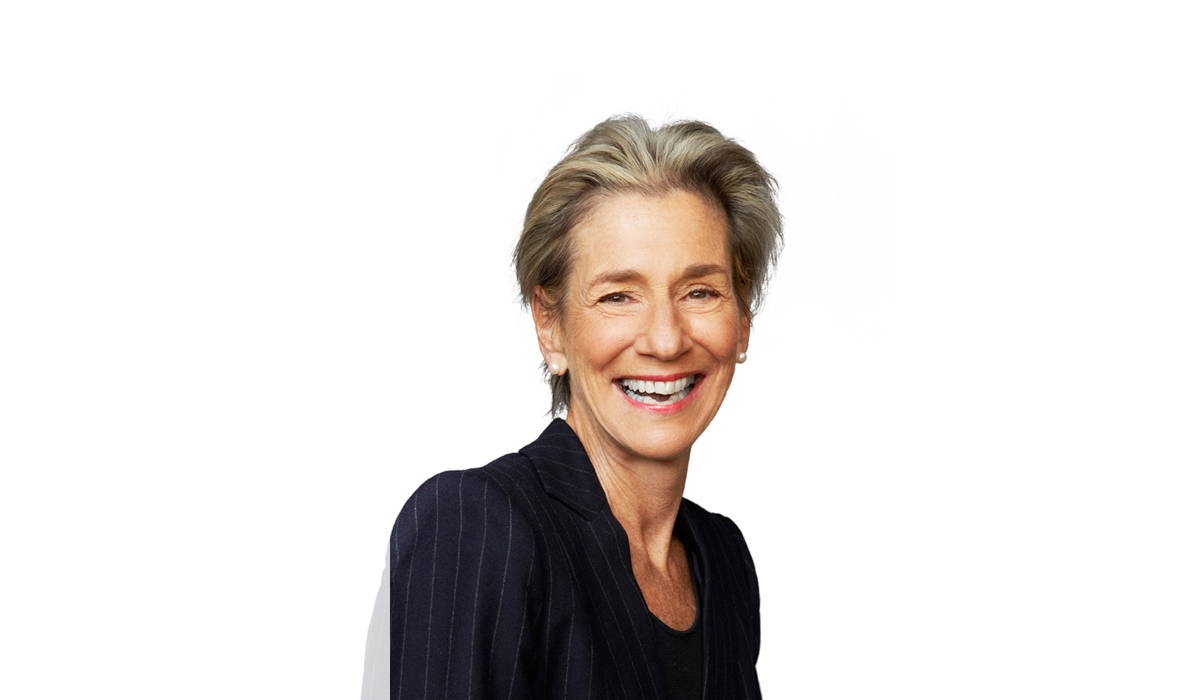
This is why my blood is red (and why I've always loved Mareng Shelly)


Timeless Ogilvy
Shelly Lazarus
Chairman, Ogilvy & Mather
Ogilvy & Mather Global Workshop, Istanbul, March 3, 2010


I can’t tell you how happy I’ve been to be together with you in Istanbul. We are a family. And it’s been more obvious to me over the past few days than ever before. On Monday, we sobbed together over the death of a man we knew and loved, a man who was so dear and important to us.

But we’ve also had some happy events.

We have celebrated one of our leaders who is retiring – Marcia Silverman – over the course of a series of events.

And this morning we have an anniversary to celebrate. I want to recognize Nasreen Madhany who has been with us for 35 years. She led Media in Canada for us; then came down to New York when we won IBM to lead IBM media for us; and then started our digital media company, Neo, and built it from scratch into our fastest growing unit. Lou Gerstner said of Naz one day, “I love her. She talks faster than anyone I know.” Naz, you are a force of nature. It is an honor to work with you. Can you just stand so we can recognize you and thank you for 35 years?

Now we’ve spent the last few days talking about the future of our company, a rather important subject.

I believe Miles has given you a clear and compelling sense of direction, and you all have been adding to the discussion. Before I go on, I would like to recognize Miles, not just for organizing this meeting – which took great vision and commitment to get to happen, to will to happen – but for taking on the leadership of this company with the energy and the passion that he has. Miles is driving us to the next chapter in our history, and he has my full, unstinting support.

It is vital that we plan our own destiny, that we put our future in our own hands. I have always believed in the value of long-term planning for any enterprise. It was Miles who demonstrated the value of the five-year time horizon in the planning he did for Asia. It was TB Song who first showed us its power in the first Five Year Plan he did for China. (Will any of us ever forget China’s Five Year Plan presentation in Shanghai. It was so exciting, the entire Board rose to our feet with applause. It was thrilling.)

The truth is, when you change the perspective from one year to five years, what you plan is different. What you think about changes. When you’re thinking five years out, you must, in fact, dream your future and figure out how you’re going to get there, year on year.

We need a roadmap that guides us day-to-day on the way to the future. We need a roadmap to ensure that we are each pulling in the same direction, and we need a plan that places individual accountability in each of our laps. We might not have it as we leave Istanbul, but we need to have it.

But I am not here today to repeat what we’ve all been talking about for days. Rather, I would like to add some perspectives of my own about what makes our company worth the effort–what it is that keeps us here, some of us for 20, 30, in my own case, almost 40 years. (I’m the person with the lowest boredom threshold in the world. How did this happen?!? I will tell you.)

Because what I would like to talk about this morning is the values that have held us all here over the years; values that are timeless; values that are our bedrock. Values that define us, and will keep us focused and true to who we are even as our business continues to evolve. (And it will continue to evolve continuously and relentlessly, as so many people over the last few days have observed.)

David Ogilvy gave us many things. One of the most important was our enduring mission. Back in the 1950s, before brands were fashionable, David said (and you all know this): “Every advertisement is part of the long-term investment in the personality of the brand.”

The remarkable thing is that he said it when no one was really talking about brands; when “products” and “brands” were interchangeable terms; when what agencies did was pretty straightforward–Advertising agencies produced ads for newspapers, magazines and television.

When Charlotte Beers became the first CEO who hadn’t grown up at Ogilvy, and was looking for an organizing principle that would refocus the agency, she found it in a flash in David and his belief in brands. (Sometimes it takes an outsider to point to the treasure contained right within the enterprise. “Look no further. It’s right here. It’s what you’ve always been about,” said Charlotte.)

But David also said something else that has made all the difference to who we are and that has defined our value through time. He said: “Unless your campaign is built on a big idea it will pass like a ship in the night.”

So here was the aspiration…here is the timeless ideal: Create big ideas that make a difference and that last. Find great creative ideas that transform enterprises, that are game changers for our clients, that take them from being small and narrow manufacturers of products to being significant in the world; ideas that drive their businesses, that make the world pay attention to them and their missions, that differentiate their offerings in the marketplace.

“Put creativity at the heart of the new Ogilvy” has been said several times over the past few days. Yes, indeed … just as it’s always been at the heart of Ogilvy from the beginning. A creative company above all. Then. Now. And forever. Timeless Ogilvy. Eternal Ogilvy.

All the great Ogilvy campaigns have been great brand campaigns. Transformative campaigns. Campaigns that have built and grown and defined global companies. Not just big ideas – huge ideas. From Schweppes to Pepperidge Farm to Dove to American Express…these were all Ogilvy ideas that built companies. We shouldn’t aspire to just win advertising awards; we should aspire to help our clients build enterprise. That’s our legacy. And what could be more exciting! That’s why I’ve stayed here for more than 30 years. I’ve done that. Over and over. And I’ve loved it.

I also love what Jon Iwata proposed yesterday as our positioning, a reflection of how he and our clients see us: to be, in Jon’s words, “the one-of-a-kind partner to the very best and most ambitious brands in the world.” Isn’t that really what we’ve always been about? Isn’t that really Ogilvy’s best self?

What we’ve been able to do for IBM has been thrilling. I would argue that our current work for “Smarter Planet” is the demonstration of what Ogilvy can do for a brand. IBM, as it defines its mission, is setting out to do no less than change the way we live and work and interact. And we are telling the world. You heard it from Jon yesterday. What value does Ogilvy bring to our clients? You need look no further than IBM and Smarter Planet. (And I don’t care if it never wins at Cannes, because it won’t.) Jon Iwata’s assessment yesterday is the real measure of value.

So let’s now talk a bit about Ogilvy the brand, about what is timeless and boundaryless. And make no mistake…Ogilvy is a great brand.

We tell our clients that the brand is the sum total of the history of the enterprise, the values of the company, the quality of the products, the people and the depth of the culture. We tell them, your brand is who you are at the core. And just as that is the philosophy we bring to our clients, it is vital we never lose sight of this for ourselves.

I believe firmly the best guide for Ogilvy as we evolve (and evolve we must; “change or die”), the best guide is not to forget, overlook or undervalue our brand.

Now, there is indeed a paradox in that thought.

On the one hand I believe you must stay true to our heritage. On the other, we are all being called upon to change and adapt with the times. That is what we all have been talking about over the past few days. Who didn’t hear, loud and clear, Antoine de Saint-Affrique’s challenge: “Unilever is changing fast. Will you be able to change fast enough to keep up with us?” That is a central question.

But here is the thing we all know to be true of great brands: they don’t diminish as they evolve; with thoughtful stewardship they draw strength from their essence.

And I believe we have arguably the strongest brand in our industry.

Today, Ogilvy is a strong and distinguished global company – respected for our integrity, our creativity and our culture.

It is our great unfair competitive advantage.

It is not that we have not had our rocky times. (We all have been through plenty of that lately.) We’ve not had our strongest years in 2008 and 2009. And, as you’ve heard, it hasn’t just been the global economy. Our revenues will go up and down over the years, I assure you, but we will persevere because we know who we are. We know where we’re going. We know our place in the world and we know our value. We believe in our brand. And because we understand who we are at our core, we can change the way we operate, the way we go to market, the way we organize the company, the businesses and geographies on which we focus.

We can do all that and never lose our center as we go forward. That’s a strong brand.

You know, I was a very lucky CEO. So is Miles. That’s because our company was founded with a point of view, a set of principles crafted by a brilliant man who (twice lucky!) was also a brilliant copywriter. (And if you want to be reminded of the value of that, just contrast Unilever’s term “healthy dissatisfaction” with David Ogilvy’s “divine discontent” and you understand the power of great copy.)

David Ogilvy spent the lion’s share of his intellect and energy on not just operating a company, not just writing great ads, but on building a philosophy and a culture that would endure long after its founder. So today we find ourselves with a treasure…with a set of principles that help build and sustain an ideas-driven, a brand-driven culture.

I can tell you from my nearly 40 years here that every time we have started to lose our way a bit, or needed inspiration, or needed to connect more deeply with our clients, we simply returned to our values and to our culture.

When we needed to expand our business in new markets without diluting our core offer, we had this vision and a set of values to count on. Through time, we have had something unifying and personal to draw on, to engage new people coming into the company, to connect with new partners, new clients. To sustain a credible sense of mission. Believe me, this timeless resource, our culture, is the envy of the business.

We would not be the company we are today without this common sense of “what we believe and how we behave.” (Often referred to as “culture.”) We know who we are at our core.

“What we believe” starts with our basic belief in the value of ideas.

We know (not just believe) that ideas are everything in our business. Ideas that spark, that engage, that add context, that tingle, that stay in the brain days and weeks and even years later.

Ideas inspire, they plant a flag, they give meaning. Ideas are what clients can’t do for themselves. Ideas are what give us our value.

And let us never forget that we do have products...commercials, print ads, websites, posters, pop-up stores...and they have to be excellent. And as excellent as they are, they will never be good enough, as David and now Eugene remind us. And that is also part of the culture of Ogilvy–Divine Discontent. We’re always striving. It goes to the core of who we are as people. And when Khai and Eugene exhort us to get the work better and better–that is at the heart of the Ogilvy culture. Divine Discontent. Timeless Ogilvy. Eternal Ogilvy.

One of the other things that is core to Ogilvy and which we’ve talked a bit about over the past few days is the belief that no one has a lock on ideas. It’s not a department. They can, and do, come from anywhere, and everywhere within our company. We celebrate that. Pervasive Creativity? Always. Timeless Ogilvy.

But it’s not just the creativity bit that defines us. There is an underlying open-mindedness in our culture that is defining.

And it is this open-mindedness that, I would argue, sets up a meritocracy. We are, we always have been, a meritocracy – a culture in which your advancement and your rewards are based solely on your contribution. And it has been a critical aspect of our success. Its allowed our people to grow, to feel it’s possible to contribute regardless of office location or department or background or philosophy. It’s why we have 12 young Associates with us at this meeting today (and if we don’t listen carefully to what they had to say, we’re mad). It is part of the stuff that brings us together.

People often ask me why women do so well at Ogilvy It’s not that David “liked women” (he did, but that’s beside the point). It’s that he was gender blind. He was actually blind to everything, save contribution and achievement. That is why, I believe, you can have not one, but two women in a row as chairman. I have always said that women don’t need “help”. We don’t need remedial programs. What we need is an even playing field. And at Ogilvy we have always had one; everyone has had one. Meritocracy born of open-mindedness. That is timeless Ogilvy.

An open culture that objectively measures individual contribution also creates an environment where it’s okay to try new things. Experiment. Launch new initiatives even when you’re not 100% sure they will work. This, too, is part of who we are. We are a culture of innovation. Martin Sorrell, on Monday, called it farsightedness. Whatever you call it, it has been crucial in allowing us to evolve over 60 years.

Do you know how OgilvyInteractive came to be…15 years before there was an Internet?

Some of us believed that there would be “interactivity” in the future. Martin Nisenholtz (who is now the president of NY Times Digital) was our “Head of Interactive” starting in the early 1980s. We didn’t know what interactivity would look like in the future (this was the era of boxes hooked up to televisions sets and local kiosks where you could “interact”) but we (and he) saw it coming. We knew someone would discover how to allow us to be interactive, to talk and transact directly with consumers. We just didn’t know the form. (Believe me, back then no one foresaw the Internet!) I spent years of my life trying to explain Martin Nisenholtz’s salary line to Martin Sorrell. It wasn’t an easy argument to make, but I prevailed. And because of Martin Nisenholtz, and because we had Ogilvy Interactive, we were more ready to use the Internet as a marketing tool than any other organization. We had been experimenting for years.

So Ogilvy, constantly trying new things: Think RedWorks. Constantly innovating. Ogilvy Digital Labs. Always dreaming the future. OgilvyEarth. Farsighted. Ogilvy Noor. And bold. Ogilvy at its best. Timeless Ogilvy.

I want to talk about respect. We are a respectful culture.

Starting with clients, David exhorted us to never forget who signs the check; to buy our clients’ products (it’s only good manners.) to never come between our clients and the footlights.

But I believe respect for clients goes even further. It means living up to the promise to deliver what you commit to, be it a global campaign, or a local promotion. It means respecting our clients’ needs, understanding their organizations, and looking for the growth possibilities in their business even when we’re not asked–especially when we’re not asked. That is what makes for a 30 or 40-year relationship. This larger sense of shared mission is what we promise. This is not always what we do. Just last week I saw an email from an important client that said (and I am reading his actual words here): “My issue is simple. Sales are not good for some time now. I seek help from the agency to act as true strategic partners, not just as producers of the next TV ad.” We’ve talked about business acceleration over the last days. We’ve talked about effectiveness. (“Ogilvy is the most effective agency in the world,” said Tim Broadbent yesterday.) But now we have to actually do it, client by client, country by country. That must be part of the new Ogilvy. Execution and accountability everywhere. “We sell or else” is timeless Ogilvy.

To be truly accountable, we must always ask ourselves the questions: “Did our work grow our client’s business?” “Was it good enough?” “Did we spend the clients’ money in ways that made a difference?” One thing that I’m convinced of, having sat here for the last few days: we know how to do this more than we’ve ever been able to do it before. This is what Dimitri Maex, Tim Broadbent and John Bell have talked about. We have the means; we now have to have the will.

David Ogilvy also had great respect for consumers. He said famously, “The consumer is not a moron, she is your wife.”

I believe respect for consumers, understanding them, trusting their intelligence, has been critical for us in developing great advertising over the years.

I think our focus on planning going forward will help ensure this continued respect for consumers, for understanding their wants and needs. But we don’t need planners to tell us that people are not stupid; that they don’t want to be talked down to, and no brand that does will survive.

I think of the work we have done for BP, where we insist the consumer join the dialogue, take some responsibility for the often careless way we consume energy. The public responded strongly and emotionally. It was advertising that made them think, that made them participate in the debate. I was struck yesterday when Jon Iwata said that IBM’s advertising purposely invites people to think. I could name a dozen more campaigns and so could you, that really do express insightful thinking, and that talk meaningfully and intelligently to their audiences. That is timeless Ogilvy. There is an intelligence to our advertising that makes it ours.

In the end, though, if you ask me what is at the heart of our company, what makes Ogilvy Ogilvy, it is the value we place on our people.

David believed that the people in his company mattered most. He believed that the company should employ not only the best and the brightest, but those with character, respect and civility. He wanted us to be a company of “Gentlemen with Brains.”

He despised and had no tolerance for “toadies, bullies, paper warriors, pompous asses and prima donnas.” That’s the kind of corporate culture that kills collaboration, kills mutual respect and ultimately kills creativity and innovation.

David railed against it, and gave us a foundation of civility and respect. I like to say we’re the nice people. (And I must at this point remind you all that to be successful in our next chapter, there is no need to diminish what came before. There has been great work done by great people, many sitting in this room, over many years. Please do not damn it, demean it or dismiss it. That is not graceful. That is not Ogilvy.)

Back to people, nice people. I want to tell you about a moment 15 years ago, when I was just about to become CEO, I went to Touffou to spend time with David. Quite frankly, I wanted and needed all the advice he could give me. Herta was there, which always makes it more wonderful. It was March, kind of cold and damp. So we sat by the fire and talked. We walked outside and we talked. Of all the things we talked about, I remember most what David said about people.

He said that, as much time as he had spent in his career being concerned about people, recruiting them, making sure they were happy, in retrospect, it wasn’t enough. He said to me: “You can never spend too much time thinking about, worrying about, caring about your people because, at the end of the day, it’s only the people who matter. Nothing else.”

In our industry, I truly believe that the people with the best people win. And our strategy has always been, and must continue to be, to attract and keep the best people.

As the agency has become so much bigger, so global, we have to be a clan united not by a cult of personality, or by some irrelevant loyalty to a man, but by another kind of bond…and that is mutual respect, civility, belief in a set of principles. A sharing of a common legacy and an adherence to a set of values. You’re an Ogilvy person or you’re not. (And you each know what I mean.)

So, now, as the world changes, as economies fluctuate, as new technology delivers a hundred new devices from which one can consume all the media in the world, we at Ogilvy know what to do.

It all comes back to our principles, back to a focus on brands and ideas, and a belief in and commitment to the people who bring both to the table.

Here is my personal favorite quote from David Ogilvy, because I believe it is a universal call to action: “Raise your sights! Blaze new trails! Compete with the immortals!”

Glorious words. Timeless words. He asked individuals – and leaders – to look high and far. To not be content with good enough; to dare to be great. And isn’t that what we’ve all been talking about over these last few days?

Change is here. It will affect us all. The survivors–the great companies of the 21st century will be those that find within themselves the best way to manage that change. The great companies of the 21st century will be those that find, nurture and glorify their own timeless values going forward.

As I said, we have an unfair competitive advantage in our brand and our culture. It is our brand and our culture that will allow us to change. We can become the new Ogilvy because of the strength of Ogilvy, all that it has been and all that it means. I like to think of it more as Ogilvy evolved for the 21st century. Timeless Ogilvy…but made fit and ready, appropriate and relevant, for this next decade. But it is up to you to keep our brand and our culture alive and well. It is up to you to take full advantage of its power to attract the best people, to provide the greatest value for clients and to produce work that is outstanding. World class and memorable. The stuff of legends. We have done it before and we will do it again.

This history, this culture, this legacy, this ideal – this is your birthright. It’s yours. It’s a gift. Use it well.

I have every confidence in the future of this company because I have every confidence in you.

Monday, September 13, 2010

Shove 'reality' up your ass

Color me strange but I’ve never liked watching contests. The idea of strangers trying to outdo each other in singing or dancing or prancing about and looking beautiful simply does not hold any appeal for me. Take beauty contests. I never understood how people can be so obsessed with them. Cut down to their barest, beauty contests are simply a showcase of women cavorting in gowns and bikinis with a little question and answer segment thrown in to show that, surprise, they can talk. All this to-do about what’s her name saying “major, major” is ridiculous. As if people actually expected beauty pageant contestants to say something truly meaningful and life-altering (or do they?). I’m not saying they're stupid, but come on people, let’s not even try to pretend it’s a UN debate.

But worse than beauty contests are these reality shows. They’re like those ancient gladiatorial fights but instead of the audience feasting on blood and gore, they feast on the emotions of people in ‘real’ situational dramas. Don’t get me wrong, I understand why they would appeal to people. Any one of these shows is bound to fall under a story archetype or two. But I’d rather have my dramas served up to me with beautiful lighting, a tight storyline and coherent, if not, moving dialogue. Not something like: “Like, ever since I was a kid, I’ve always, like, wanted to be a dezign-ER. And that bitch is, like, totally trying to sabotage my dream. And so, like, I totally hate hUr.”

And it’s not that I’m some sort of misanthrope incapable of empathizing with the joys and pains of other people. I recognize joy and sorrow only too well. But reality shows are a bit of a stretch for me. Sure the people are real and their reactions are real but they’re people placed in artificial situations. How can that be ‘reality’? Give me an NGO worker knee deep in plague-ridden bodies any day.

But what worries me about this mass obsession with reality TV is how it’s making our reactions to real situations unreal. It’s like we’re so used to having everything presented to us in HD complete with running commentary that we don’t recognize real tragedy when it’s right in front of us. The sad fact of ‘reality’ media (and that includes tabloid-style news reporting and the endless carousel of ‘posts’ in social network sites) is that the only way we can be galvanized into action now is if we see it on TV or read it in some email or Facebook post. I don’t think there are still many people who will stop to look at a poor stranger in real life and actually help, in however small way they can.

I’m worried that we’re losing the ability to read the subtleties of the human condition. I mean, do we even know what quiet desperation looks like anymore? Or can we only recognize desperation when it’s brandishing a gun over the heads of innocent tourists? And even that we treat as a spectacle, a slice of reality TV.

But I’m hopeful. I’m sure that one day this predilection for reality media will pass and our voyeuristic taste for emotional blood and gore will be sated. If not, then we will certainly deserve the stultifying emotional deaths we’re inevitably heading towards.


Friday, September 10, 2010

Para kang ipis


Para kang ipis and I will tell you why:
  • You have a primitive brain that's only capable of doing one thing--order you to put one foot in front of the other
  • You're always in places where you're not wanted
  • Nakakakilabot ka at lahat ng lumalabas sa bibig mo
  • Ang dumi mo tignan
  • Mahirap kang puksain

Saturday, September 04, 2010

Why I Do What I Do

A few months ago I was seized by a mixture of disappointment and uncertainty about my company. Actually it was more about being torn between great love and great disappointment. And so to clear my head of false sentimentality about Ogilvy and, ultimately, help me decide whether I should stay or go, I decided to focus instead of why I do what I do and if indeed Ogilvy is the place that will allow me to do what I love to do. And so one night I sat down and wrote down this list.

WHY I DO WHAT I DO
  • I do it because I love getting the ungettable
  • I do it because I'm addicted to the thrill of the chase
  • I do it because I haven't done it before
  • I do it because it's there
  • I do it because I can
I'm curious to know how this laundry list will evolve. In the meantime, I guess my blood remains Pantone 486.

Wednesday, August 25, 2010

I do love Tennessee

This is an exerpt from Tennessee Williams' introduction to a collection of his plays. I think he shared this because he was trying to explain how it was to be a writer. I love this little story. Williams has that keen sense of observation and painful understanding that only an outsider can have. An acutely self-aware and highly intelligent outsider, that is.

"I once saw a group of little girls on a Mississippi sidewalk, all dolled up in their mothers' and sisters' cast-off finery, old raggedy ball gowns and plumed hats and high-heeled slippers, enacting a meeting of ladies in a parlor with a perfect mimicry of polite southern gush and simper. But one child was not satisfied with the attention paid her enraptured performance by the others, they were too involved in their own performances to suit her, so she stretched out her skinny arms and threw back her skinny neck and shrieked to the deaf heavens and her equally oblivious playmates, 'Look at me, look at me, look at me!'

"And then her mother's high-heeled slippers threw her off balance and she fell to the sidewalk in a great howling tangle of soiled white satin and torn pink net, and still nobody looked at her.

"I wonder if she is not, now, a southern writer."

Monday, July 26, 2010

Saturn Returns

If the alignment of the planets are to be believed, I am entering my years of thinking dangerously. I'm afraid to say that I'm afraid. I've been there before and I know how thoroughly I can destroy myself.

As always, the answer came during an extended shower. It's surprising that it's something that I've used carelessly and often in the course of my job.It's almost a cliche really.

Sustainability.

Sustainability in my passion for work, sustainability in valuing what I have, sustainability in keeping relationships, sustainability in generally keeping self and sanity together.

Bring it.

Tuesday, July 13, 2010

Shortwave

When I was in college I used to break the monotony of listening to my cassette tapes and FM favorites by tuning in to shortwave radio. Much of what I caught was unintelligible gibberish but once in a while I would hear music. The ones I enjoyed most were instrumental Chinese music that I could only describe as eerily beautiful.

I miss these surprise discoveries that open up my mind to wonder beyond the here and now. For the last few months I’ve been fiddling with the dial and impatiently rifling through my collection of good old reliables. I can’t sit still long enough to finish a song. Either that or I loop the same song for days. It seems that I’ve exhausted my playlist yet again. I must get back to the unexpected joys of shortwave soon.

I wonder what’s on.

Monday, April 19, 2010

Tailor Me Mine


“The only man who behaved sensibly was my tailor; he took my measurement anew every time he saw me, while all the rest went on with their old measurements and expected them to fit me.”
- George Bernard Shaw

My former colleague, Mel, thinks it’s funny that I have a tailor. Women, she said, should have a sastre—not a tailor. But a sastre just doesn’t cut it for me (pun intended). A sastre does not have the same gravitas, the same quiet dignity of a tailor, no matter if that sastre was also your mother’s.

I am amused by my tailor, Nomer. I love that he dresses in well-cut shirts and pants and that he hardly speaks except to quietly recite my measurements to his staff. I love how he smiles with benign tolerance whenever I suggest another new-fangled idea for my shirts. I love that he keeps my shirt patterns year on year. We have a relationship, this Nomer and I. It’s one of mutual respect, tolerance, discretion and patience.

Like an old friend, a tailor takes you as you are with no judgment and will always make adjustments.

Monday, March 22, 2010

...the point is to discover them


There ought to be a sign whenever a major epiphany is about to take place. That way, you’re not caught, literally, with your pants down, i.e. while you’re taking a dump or shaving your pits in the shower. An epiphany deserves some dignity after all. But such is my life of gracelessness that my epiphanies have always taken place whenever I am at my most unglamorous. This last one happened sans underwear, my hands covered in paint. I even have camel toe photos to remember it by. Sweet.

My colleagues call it The Picasso Incident.

Suffice it to say that it was a test of will and vision. Mine against theirs. It was also my first test of true leadership. And I failed miserably. On the day my promotion became official. Mortified and contrite cannot begin to describe how I felt. Servant leadership died that day in Boracay. Sorry guys.

The thing is, I was prepared for people to get angry at me. That’s what happens when you’re fighting for your Big Idea. I was prepared to get bruised and bloodied for mine. What I wasn’t prepared to see was hurt and pain. As my boss chided during karaoke hour, “there’s no easy way to break somebody’s heart.”

It’s funny how we stumble on personal truths. I’ve been searching for mine for a very long time. Little did I realize that I would find it on that island where, a mere three months before, I had almost died.

And now I am alive again.

As Celie put it in the Color Purple, “I’m poor, I’m black, I might even be ugly, but dear God I’m here! I'm here!”

Wednesday, February 24, 2010

Sing it with me now, “Reflections of the way life used to be…”

Had digital cameras been invented during the 1990s we would have had indelible evidence of bad hairstyles and even worse fashion, from helmet hair to St. Michael socked feet (yes that was what it was called before it became Marks & Spencer) stuffed in Cole Haan shoes, or derivatives thereof, and of course, a whole rainbow of Giordano shirts.

More importantly, they would have captured:

• Baba in his Intsik white sando strumming Dust In the Wind as I, with wet hair and no bra, played lead singer
• A drive to Batangas City in Baba’s old Ford, singing along to sappy mix tapes, the music blaring out of a home-made boom box
• Many, many drunken nights in Faces and Mars with the Barrios brothers (Rica as head Barrios brother, of course), Sean and Mike, Karrie and the rest of the Assumption girls, and the Pinoy Montessori boys
• Drinking tequila during school nights in Lola Becky’s office-by-day-party-palace-by night unit at the corner of Legaspi and Rufino streets
• Getting thrown out of a party in Alabang
• Baba and the rest of the boys chanting, “Free Billy!” outside Billy Boy’s house
• Drunken breakfasts in Whistle Stop
• Baba regularly exhorting us to please behave like normal, decent girls and cover ourselves
• Beer and beach in Batangas followed by more beer and steak in Tagaytay
• A limping, bloodied Paolo, Baba singing “Reflections” and Karrie and I tittering madly even as a dangerously angry Manang Rica spewed invective and promised bodily harm to all of us
• Baba describing a magical moment with Lee that involved beer and a bonfire somewhere near the vicinity of Palace In The Sky
• Partying ‘til morning while the house and the rest of Metro Manila turned into a winter wonderland thanks to Pinatubo’s volcanic ash
• Drunken kulitan in Alpa Hotel (wrong spelling kung wrong spelling!)
• Baba and Ariel dancing “U Can’t Touch This”
• Panny smokes with Chill and whoever cared to share
• An infamous night in a BF garage with a hog-tied, badly bruised party pooper
• Guns and Roses and beer fest in the Barrios brothers’ den every Friday
• Baba in his forever Intsik white sando driving me home at 9 in the morning because we had, once again, gotten ourselves blind drunk the night before
• Bacon breakfasts and dinners with Baba and Tito Len
• Baba sleeping in that peculiar way
• The rest of us waiting for Joanna Lee in Sta. Rosa with a nervous Baba keeeping the beer and jokes flowing all night

I can’t quite remember the rest right now. And anyway, wishing that we had digital cameras back then would have been pointless. We would have lost each and every one soon enough. Instead all we have to show for our friendship are a few faded photos and a heart full of memories.

I will miss you Babs.

Thursday, February 18, 2010

And the final is me

In a fit of self-righteous pique I determined that I would win every pitch that came my way. Now I have three new accounts—upping my accounts to a grand total of eight—and a burning desire to leave it all behind and just blog for a living. Why is it that whenever I get what I want, I end up not wanting it after all? Just last month I wanted to burn all my recently-acquired worldly goods and methodically trash my apartment. The same apartment that, three months before, I obsessively and methodically slaved to fix. Why, because when I finally moved in, I realized that I wasn’t as happy as I thought I would be. It’s very confusing. In late 2007 I awoke from a deep coma and discovered single-mindedness. Since then, I’ve been single-mindedly going after what I thought I wanted, and with great success too. Job in dream company, check; car, check; apartment, check; marquee accounts, check; promotion, check. I thought I’d be ecstatic by now but I’m not. There’s something missing or I may have lost something along the way. Could it be…me?